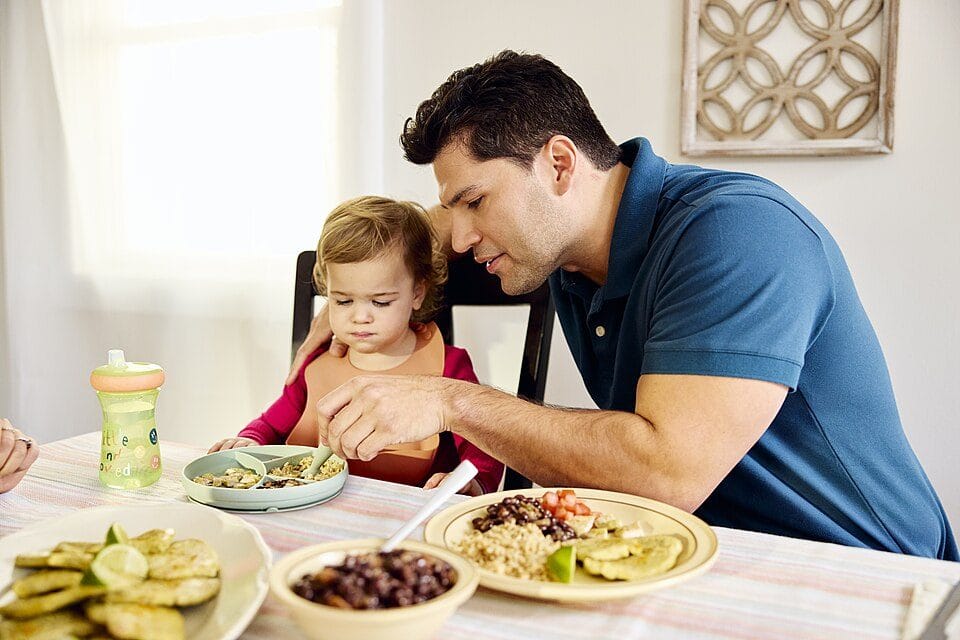
My friend Dana texted me a photo last week: a plate of chicken, rice, and broccoli, barely touched, next to her four-year-old's arms crossed like a tiny bouncer refusing entry. "Third night in a row," she wrote. "I don't even know what I'm fighting for anymore." If you've stood at a counter negotiating with a small person over three peas, you already know the answer isn't more negotiating.
Why the Battle Escalates in the First Place
Most parents walk into picky eating with the wrong tool for the job, and it isn't their fault — bribery and pressure feel logical when a kid won't eat. You offer dessert if she finishes her carrots, or you sit at the table for forty-five minutes insisting he try "just one bite," and for a night or two it might even work. But the tactic that gets a bite eaten tonight is often the same one that makes tomorrow's dinner worse, because it teaches a child that mealtime is a negotiation rather than a routine, and negotiations invite pushback. Once a three-year-old learns that holding out gets her a different, more exciting plate, she has no reason to eat the first one you served, tonight or any other night. Registered dietitian Ellyn Satter, whose feeding research has shaped pediatric guidance for over four decades, calls this the difference between parents controlling what and when food is offered and parents controlling how much a child eats — the second one is where things go sideways. Her framework isn't a trend or a hack; it has been the basis of feeding guidance used by pediatric practices and dietitians for decades, which is part of why it holds up better than whatever bargaining strategy is circulating in a parenting group this month. The families who switch to it rarely see results on night one. What they see, usually within a couple of weeks, is a kid who stops treating dinner like a hostage negotiation.
Here's the pattern feeding therapists see over and over: a child refuses a food once, a parent reacts with visible frustration or an elaborate backup plan, and the refusal gets reinforced as a strategy that produces results. Offer a substitute dinner and a four-year-old learns that holding out for chicken nuggets works. Beg for "two more bites" and a six-year-old learns that eating is a favor done for you, not something her body actually wants. None of this makes a child a bad eater. It makes the dinner table a place where the real meal being served is attention and control, and kids are remarkably good at reading that menu.
The Division of Responsibility
Once you stop owning the "whether," there is nothing left to fight about.
Satter's model, known as the division of responsibility in feeding, splits the job cleanly in two. The parent decides what food is offered, when it's offered, and where it happens — the menu, the schedule, the table. The child decides whether to eat it and how much. That's the whole boundary, and it holds even when dinner is met with a groan. No more tug-of-war rope for a three-year-old to grab, no bargaining chip, no dessert dangled as leverage — the fight simply loses its two sides. Parents who try this for the first time often describe the first week as strange rather than triumphant, because a habit of monitoring bites, counting vegetables, and narrating encouragement doesn't switch off overnight. It takes real effort to sit through a silent, mostly-untouched plate without saying anything at all, and some evenings that effort feels harder than the old way of pleading ever did. But the payoff shows up quietly: fewer tears at the table, fewer meals that end in someone storming off, and a child who slowly stops watching your face for a reaction before deciding whether dinner is worth eating.
In practice this means one meal for the whole family, not a chicken-nugget backup kitchen running in parallel. It means no short-order cooking after 6:30 p.m., and it means genuinely not commenting when a plate goes back with the broccoli untouched. Skip the applause for a good bite and skip the sigh for a refused one — both responses keep food emotionally loaded in a way that division of responsibility is specifically designed to defuse.
What a No-Battle Dinner Actually Looks Like
Put a "safe" food on the table alongside whatever the family is eating — plain rice, buttered toast, or a handful of Cheerios sits next to the pork chop and green beans, so nobody goes to bed hungry over principle. Serve, then step back. Talk about your day, ask about the school field trip, let the meal be a meal instead of a performance review. A child who's hungry enough will eat something on that table; a child who isn't will eat more tomorrow, and that's fine.
- Offer the new or disliked food in a small, separate portion — a tablespoon, not a mound — so it feels optional rather than obligatory.
- Keep one component of every meal something the child reliably likes.
- Serve family-style when you can, so kids choose their own portions instead of receiving a plate that already feels like a demand.
- Skip dessert-as-reward framing entirely. Dessert can be part of the meal, offered alongside everything else, not dangled after it.
It can take 15 to 20 exposures before a child accepts a genuinely new food, according to feeding research cited by the Ellyn Satter Institute — not three, not five. That number alone should take the pressure off a Tuesday night when the roasted carrots come back untouched again. One bite of something unfamiliar was never realistic in the first place.
Foods That Buy You Peace Without Turning You Into a Short-Order Cook
There's a difference between a backup meal and a safe component, and the distinction matters more than it sounds like it should. A backup meal is a separate dish made after the first one gets refused — that's the pattern to retire. A safe component is something already on the table that requires no extra cooking: buttered pasta, plain yogurt, sliced apple, a piece of bread. Building one into every dinner means a picky eater never actually goes hungry, which removes the leverage that makes bargaining feel necessary in the first place.
Rotate the safe component so it doesn't become the only food eaten for months at a stretch — plain rice one night, whole-wheat toast the next, a banana on the third. Keep proteins and vegetables on the table even on the nights they go untouched; repeated, low-pressure exposure is what eventually gets a food accepted, and a food that's never served again never gets a fair shot. A five-year-old who sees roasted sweet potato on his plate for the fortieth time, without commentary, is far more likely to eventually try it than one who saw it once and never again because a parent gave up.
What to Say Instead of "Just Try It"
Language matters more than most parents expect, and "just try it" is one of the least effective phrases in the whole feeding conversation because it puts the child on the spot in front of an audience. Feeding therapists tend to favor neutral, curious language that describes the food instead of pushing a decision — it lowers the stakes without lowering the standard.
- "That's roasted carrot. It's soft and a little sweet." (Describe, don't sell.)
- "You don't have to eat it. It's just going to sit there next to your rice." (Removes the standoff entirely.)
- "I noticed you touched the green beans today." (Progress that isn't chewing still counts.)
- Say nothing at all, sometimes — a neutral face is doing more work than an encouraging one.
Grandparents and well-meaning relatives are usually the hardest audience to manage here, because a grandmother who grew up with the clean-plate club is not going to nod along with a five-year-old leaving broccoli untouched without a comment. A short, kind line heading off the table works better than an argument mid-meal: "We're doing it a little differently these days — he decides how much, I decide what's offered." Most people back off once they understand there's an actual method behind it, not just a parent who's given up.
When Picky Eating Signals Something Else
Most picky eating is developmentally normal, especially between ages two and six when a child's growth rate slows and appetite genuinely drops. But there's a line worth knowing about. If a child eats fewer than 20 different foods total, loses weight, gags or vomits at the sight of certain textures, or shows extreme distress around eating that goes well beyond a wrinkled nose, that's outside the range families should manage alone — it may point toward Avoidant/Restrictive Food Intake Disorder (ARFID) or a sensory processing difference, and a pediatrician or feeding therapist should be part of the conversation. The division-of-responsibility approach still applies in those cases, but it works alongside professional support rather than instead of it.
The Long Game
Give the new approach a real trial — feeding therapists generally recommend two to three weeks before judging whether it's working, because the first response to a lifted battle is often more refusal, not less, as a child tests whether the old rules really changed. Stick with plain, boring consistency through that stretch: same offer, same lack of drama, same food on the table whether it's eaten or not. Dana texted again ten days later. Her son ate three bites of the chicken without being asked, and she didn't say a word about it — just cleared the plate like it was any other Tuesday, because by then, for the first time in months, it actually was.